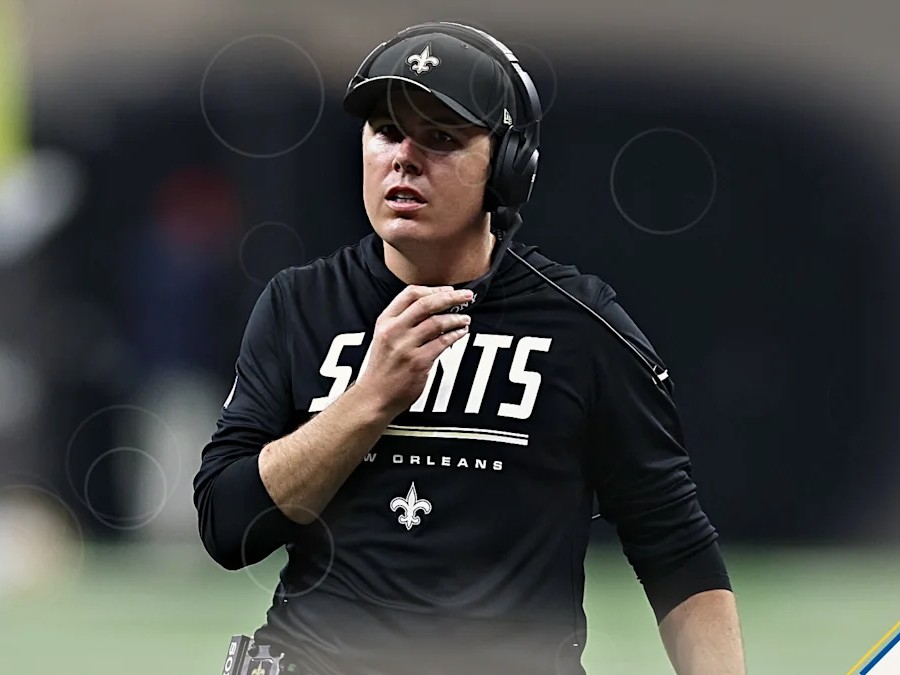
For Moore, the responsibility for turning the season around begins with accountability. The Saints' head coach did not attempt to place the blame entirely on the players. He acknowledged that his play-calling must improve and that the team needs to make better adjustments when opponents disrupt its offensive plans.
"We just have to focus on doing a better job in that department," Moore said. "Obviously, we're just not getting it done in those situations, and I have to find a way to do a better job."
Those comments will be important as the Saints prepare for the remainder of their schedule. A head coach must recognize problems, but recognition alone will not change the outcome of games. Moore and his staff must turn those observations into adjustments that produce better protection, fewer penalties, more efficient third-down execution and more points on the scoreboard.
The Saints also need to establish a dependable offensive identity. If running the football is central to the game plan, they must commit to it while finding ways to punish defenses that stack the box or bring additional pressure. If opponents focus on stopping the run, New Orleans must be prepared to take advantage of opportunities in the passing game.
Defensively, the Saints must continue creating turnovers while limiting the damage when the offense gives the football away. Winning complementary football games requires all three phases—offense, defense and special teams—to contribute consistently.
Can the Saints Escape Another Early-Season Slump?
There is a reason Saints fans should remain attentive to what happens next, even after another frustrating defeat. New Orleans experienced a similar difficult stretch last season, when the team fell to 1–4 before eventually finishing 6–11. That history demonstrates that a poor start does not automatically determine how the rest of a season unfolds. However, it also serves as a reminder that a late improvement cannot erase the consequences of missed opportunities early in the year.
Safety Julian Blackmon emphasized the importance of trust and attention to detail, noting that teams inevitably experience difficult stretches. Running back Kendre Miller also encouraged his teammates to block out outside criticism and concentrate on correcting the small mistakes that have contributed to losses.
Their message is understandable. Confidence can disappear quickly when defeats accumulate, especially when players feel they have the talent to compete. The challenge is maintaining that belief while accepting that changes are necessary.
Moore described the situation as a storm that the team must weather together. His message was about unity, improvement and preparing to take advantage of the next opportunity.
But patience among players and fans will depend on results. The Saints need to demonstrate progress on the field, not simply promise it during postgame interviews.
The Road Ahead: New York and Beyond
New Orleans now turns its attention to the New York Giants at MetLife Stadium in East Rutherford, New Jersey. Following that matchup, the Saints are scheduled to travel to Paris to face the Pittsburgh Steelers on October 25.
These games present an opportunity to reset the season's direction. The Saints do not need to solve every problem in one week, but they must show measurable improvement in the areas that have repeatedly hurt them.
That begins with protecting Shough, eliminating pre-snap penalties, taking better care of the football and finishing offensive drives. The coaching staff must also identify the best ways to use its available personnel and help the offense respond when defenses apply pressure.
The Saints have shown that they can compete in stretches. Now they must prove they can maintain that level of play for four quarters.
The AMPS Magazine Takeaway
The 23–13 loss to Minnesota was more than another mark in the loss column. It was another reminder that potential means very little without execution. The Saints showed defensive aggression, created turnovers and produced a promising touchdown drive, but those accomplishments were overshadowed by offensive inconsistency and costly mistakes.
At 1–4, the season is not beyond repair, but the margin for error is shrinking. Moore must find answers, the offensive line must provide better protection, and the players must translate their preparation into disciplined football on Sundays.
For Saints fans, the expectation is not perfection. It is progress. They want to see a team that learns from its mistakes, competes with purpose and gives itself a legitimate opportunity to win.
The next game will not erase the disappointment of the Minnesota loss, but it can provide a fresh starting point. If New Orleans can protect the football, sustain drives and build on the defense's ability to create turnovers, the Saints may yet find a path toward more competitive football.
As AMPS Magazine sees it, the message is simple: The Saints do not need another speech about turning things around. They need to show it on the field.