The New Orleans Saints opened the 2026 season with a game that somehow felt like three different football games rolled into one. For much of the first half, the Saints looked out of rhythm and overwhelmed, struggling to find any consistency on offense while falling into a 21-0 hole. Then, almost out of nowhere, the offense caught fire. New Orleans erased the deficit, tied the Detroit Lions at 24-24 late in regulation, and eventually lost 31-30 in overtime when the Saints' two-point attempt after an overtime touchdown fell incomplete. The loss drops New Orleans to 0-1, but the performance left AMPS Magazine with a much bigger question than the final score: Which Saints offense are we going to see in Week 2? The answer may determine how quickly this team can turn potential into wins.
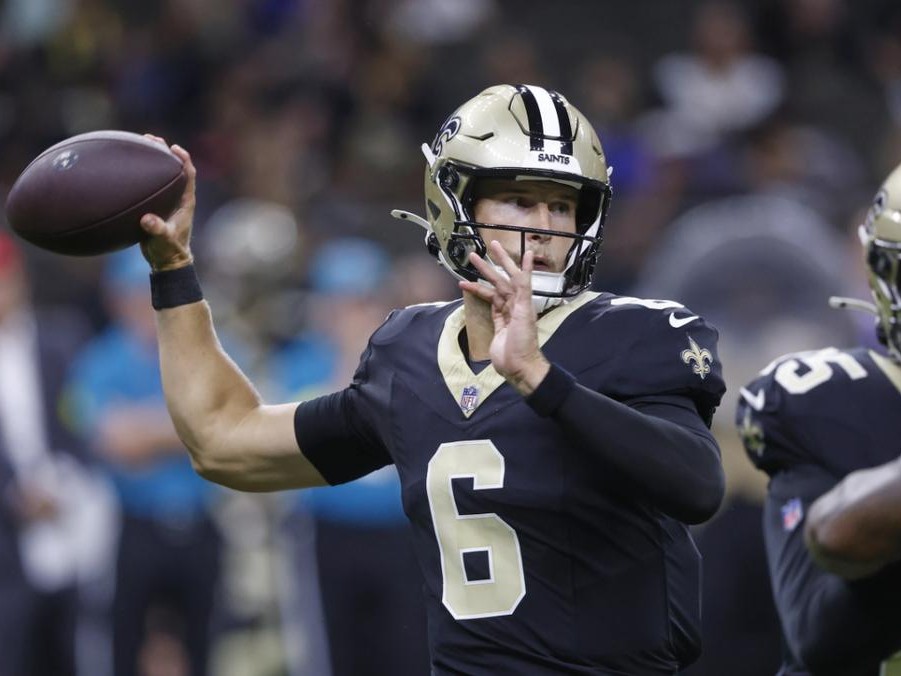
What impressed us most at AMPS Magazine was the Saints' refusal to quit. Plenty of teams could have folded after falling behind 21-0 on the road, but New Orleans continued to battle. After struggling through the opening half, the Saints' offense exploded in the second half and overtime. Quarterback Tyler Shough finished with a remarkable 410 passing yards and three touchdowns, becoming only the third quarterback in Saints history to throw for 400 yards in a game, joining Drew Brees and Aaron Brooks. Even more impressive was how dramatically Shough changed after halftime. He completed just 10 of 22 passes for 85 yards and an interception in the first half, but in the second half and overtime, he went 25-of-34 for 325 yards and three touchdowns. It was truly a tale of two quarterbacks. When Shough finally settled in, the Saints' passing game became dangerous, and suddenly Detroit was dealing with an offense that looked completely different from the one that had struggled earlier in the afternoon.
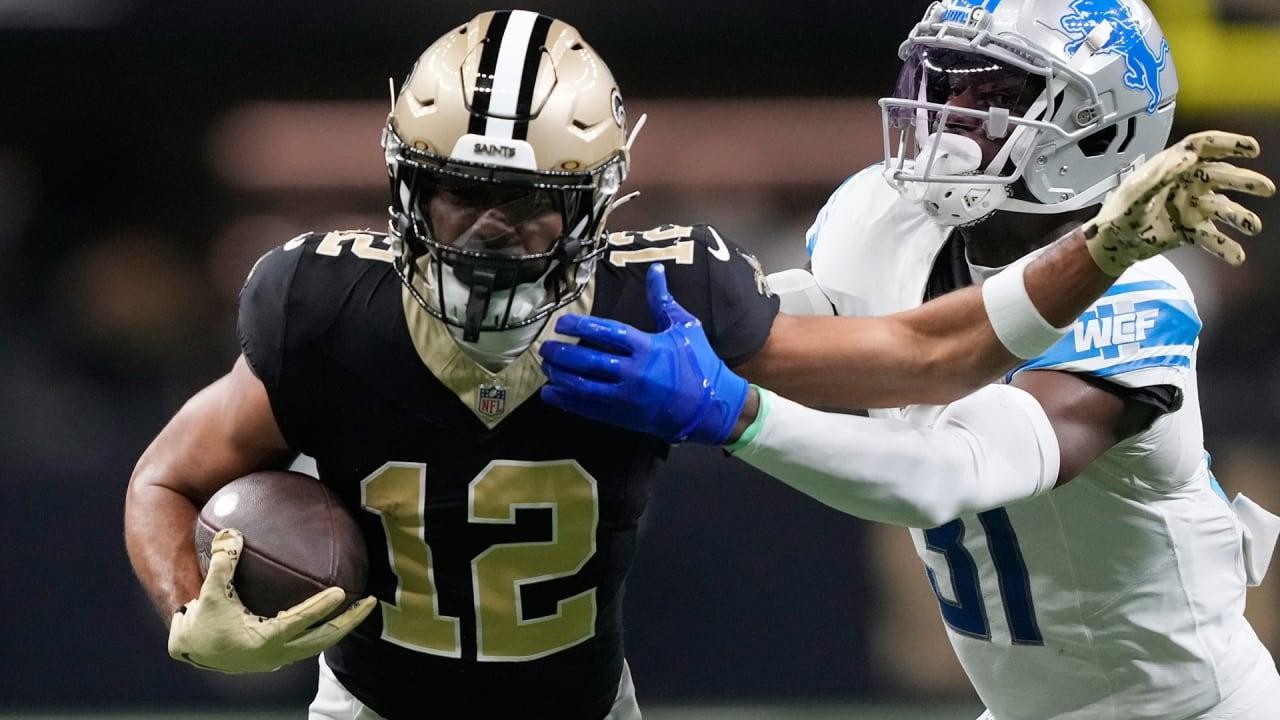
If there was one player who looked ready for a monster season, it was Chris Olave. Olave finished with a career-best 10 catches for 182 yards, including a 47-yard reception. His 182 receiving yards are tied for fifth-most in Saints history for a single game. For AMPS, however, the biggest takeaway isn't simply the number. It was how the Saints found Olave once the offense started functioning. Shough's 47-yard completion to Olave helped spark the comeback, and Olave continued making big plays throughout the second half. The Saints repeatedly attacked downfield once Detroit's defense began giving them opportunities. If New Orleans can establish that connection earlier in games, Olave could be in for a special season.
The Saints also showed that their passing game has the potential to be explosive. New Orleans finished with 469 total yards, including Shough's 410 passing yards. The Saints demonstrated that they have enough weapons to stretch a defense vertically, with Olave leading the way while Devaughn Vele, Juwan Johnson and Noah Fant also made important contributions. Vele caught seven passes for 69 yards and a touchdown, while Johnson added three catches for 54 yards and a score. Fant's overtime touchdown gave New Orleans an opportunity to steal the game. Those performances should give the Saints confidence that they have multiple players capable of making plays when the offense is clicking.
Another positive was Shough's resiliency. The early mistakes were ugly, but his response was impressive. The second-year quarterback didn't allow the disastrous start to completely derail him. Instead, he continued throwing, continued attacking and eventually gave the Saints a legitimate chance to win. For AMPS Magazine, that's something New Orleans can build around. Young quarterbacks are going to experience difficult stretches, especially early in their careers. What matters is how they respond, and Shough showed that he has the ability to settle down and lead an offense even after things have gone badly.
The offense also showed that it can operate at a high level when everything begins to click. New Orleans scored on four consecutive possessions late in the game before Daniel Carlson's 62-yard field-goal attempt came up short at the end of regulation. That sequence matters because it showed the Saints have another gear. The offense that struggled to move the ball early suddenly became one of the most aggressive and productive units on the field. The challenge now is figuring out how to bring that version of the offense onto the field much earlier.
That brings us to the biggest concern coming out of Week 1: the Saints cannot afford another first half like this. New Orleans had zero points in the first half, and Shough looked uncomfortable and out of sync. Detroit's pressure appeared to speed up his decision-making, and the Saints struggled to sustain drives. A team can't consistently spot NFL opponents three touchdowns and expect to survive. The comeback was exciting, but the hole was unnecessary. Against another opponent, that kind of slow start could turn a competitive game into an early blowout before the Saints have an opportunity to recover.
Turnovers are another area that must improve. Shough's final stat line looks fantastic until the turnovers are added to the equation. He threw two interceptions and lost a fumble, with those mistakes helping Detroit turn short fields into points during the third quarter. That's perhaps the biggest lesson from Week 1. The Saints don't need Shough to throw for 400 yards every Sunday. They need him to protect the football, make smart decisions and keep the offense on schedule. If he can do that while maintaining the aggressiveness he showed in the second half, this offense becomes much more dangerous.
New Orleans also needs to establish more balance offensively. Travis Etienne Jr. led the Saints with 46 rushing yards on nine carries, while Kendre Miller finished with 30 yards and a touchdown. The Saints threw the ball 56 times, although falling behind 21-0 obviously influenced the play-calling. Still, New Orleans needs to find a way to make the running game matter earlier in games. A productive rushing attack would help slow down opposing pass rushers, create easier throws for Shough and prevent defenses from simply teeing off on the quarterback. The Saints have the passing weapons to make defenses pay, but a more consistent ground game could make those weapons even more effective.
The quarterback question will be one of the biggest storylines AMPS Magazine follows heading into Week 2. Was the first-half version of Shough simply experiencing opening-day jitters, or did Detroit expose something that future opponents will try to exploit? We don't think we have the answer yet. What we do know is that the second-half version of Tyler Shough looked like a quarterback capable of leading this offense. The problem is that the Saints can't wait until halftime to find him. Week 2 will provide a completely different test when New Orleans travels to Baltimore to face the Ravens, and Baltimore won't be interested in watching the Saints find their rhythm. The Ravens will be looking to disrupt that rhythm from the opening snap.
One of the most meaningful stories coming out of Week 1 wasn't a statistic. It was Chris Olave's decision to wear a Guardian cap during the game. After dealing with multiple head injuries during his career, Olave explained that becoming a father changed his perspective. As he put it, "Y'all know all the head injuries I done had in my career. It was just a decision I had made. I got kids now. I want to be able to live the long game." For AMPS, that quote says more than any box score. Football is important, but life after football is important, too. Olave's decision to protect himself while continuing to compete is a reminder that players are more than numbers on a stat sheet. And on Sunday, that decision certainly didn't slow him down. He finished with 182 yards, the best receiving performance of his career.
A 31-30 overtime loss isn't the way the Saints wanted to start the season, but there is a difference between a bad football team and a team that played a bad first half. What we saw in Detroit suggests that New Orleans has enough offensive firepower to be dangerous. What we don't know is whether the Saints can play with that urgency for four quarters. That's the challenge for Kellen Moore and his coaching staff this week: get Shough comfortable early, get Olave involved early, find more balance in the running game, protect the football and don't wait until the team is down three touchdowns to start playing aggressive football.
The Saints nearly pulled off an incredible comeback in Detroit. Now AMPS Magazine wants to see whether they can avoid needing one in the first place.
AMPS Magazine Week 1 Verdict: The offense earns a B-, while the quarterback performance receives a B, with an A+ second half and a D first half. The receiving corps earns an A, the running game receives a C, and the team's resiliency earns an A+. Overall, the Saints' Week 1 performance was promising, but too many self-inflicted wounds kept them from finishing the job.
The Saints didn't leave Detroit with a win. But they may have left with something almost as important: proof that this offense has another gear.