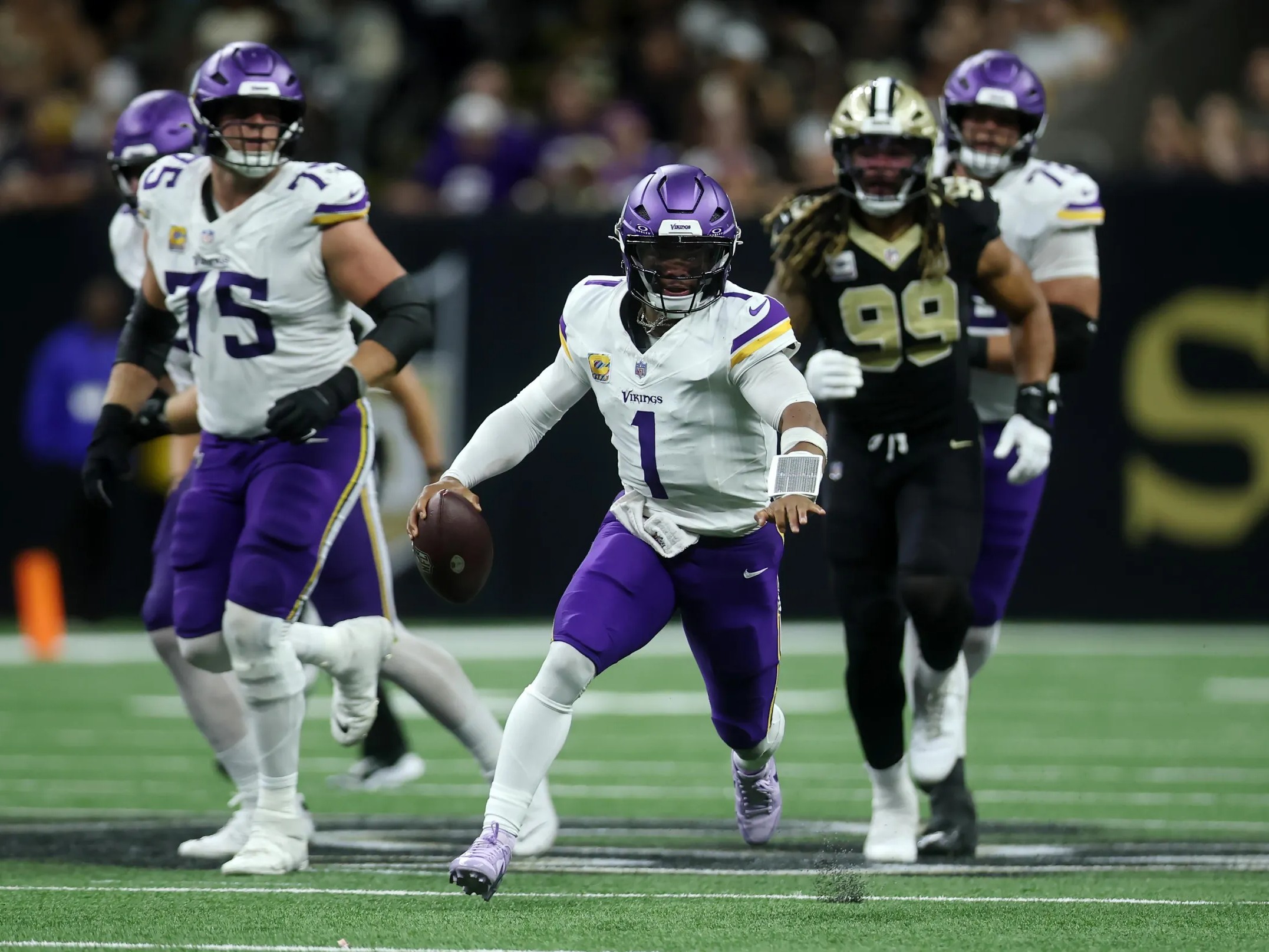
The New Orleans Saints entered their Week 5 matchup against the Minnesota Vikings looking to turn their season around and give their home crowd something to celebrate. Instead, the Saints left the Caesars Superdome with another disappointing result, falling 23–13 to Minnesota and dropping to 1–4 on the season. The loss marked New Orleans’ third consecutive defeat during its three-game homestand, leaving fans asking a difficult question: Where does this team go from here?
For the Saints, this was a game that offered opportunities but ultimately exposed the same problems that have plagued the team in recent weeks. The defense created turnovers, the running game showed flashes of promise, and the offense put together a promising scoring drive. However, penalties, turnovers, inconsistent execution and an inability to sustain drives prevented New Orleans from building on those positive moments.
The Vikings did not need a perfect performance to leave New Orleans with a victory. They simply took better advantage of the Saints’ mistakes.
What Worked: The Defense Created Opportunities
One of the brightest spots for New Orleans was its defensive effort. Against a Minnesota offense that presented a difficult challenge, the Saints managed to create two turnovers, giving their teammates opportunities to change the momentum of the game.
Defensive players showed an aggressive approach to attacking the football, and their ability to force mistakes demonstrated that this unit still has the potential to make an impact. The defense also showed stretches of physical play, particularly when defending the run, and helped keep the Saints within reach of a comeback.
One of the game's most memorable moments came when safety Jonas Sanker recovered a fumble and returned it 87 yards for a touchdown. That play provided a major spark for New Orleans and demonstrated how quickly a defensive takeaway can change the energy of a football game.
Those moments matter. When an offense struggles, the defense must find ways to create additional possessions and give the team a chance to recover. The Saints did some of that against Minnesota.
Unfortunately, defensive takeaways can only carry a team so far when the offense repeatedly gives the football back. New Orleans committed three turnovers of its own, undermining the defense's efforts and making it difficult to build any sustained momentum.
The lesson is straightforward: creating turnovers is important, but protecting the football is equally critical.
What Did Not Work: The Offense Could Not Find Its Rhythm
The biggest concern for the Saints remains their offensive consistency. New Orleans entered the season showing encouraging signs, averaging 27 points per game during its first three contests. Over the following two games, however, the offense averaged only 18.5 points and 231 yards.
That decline has become difficult to ignore.
Against Minnesota, quarterback Tyler Shough faced pressure from a Vikings defense that repeatedly used blitzes to disrupt the Saints' timing. New Orleans struggled to respond consistently, and the pressure forced the offense into unfavorable situations. When the Saints fell behind the chains, converting third downs became increasingly difficult.
Head coach Kellen Moore acknowledged that Minnesota's defensive approach created problems for his team.
"I felt like we had a plan. Obviously, the plan wasn't good enough," Moore admitted, taking responsibility for the offensive preparation and execution.
His comments reflected a broader issue. When an opposing defense repeatedly brings pressure, an offense must find ways to counter it. Quicker passes, screen plays, effective protection adjustments and a balanced running attack can help prevent a defense from dictating every snap.
The Saints did not execute those answers consistently enough.
Shough continued to battle, but the young quarterback needs better protection and more manageable situations. Moore acknowledged that responsibility, saying the team must do a better job protecting its quarterback and placing the offense in situations that allow for a more balanced attack.
The offensive line also faced scrutiny, particularly as the Vikings' pressure disrupted the passing game. Pre-snap penalties made matters worse. Moore specifically pointed to penalties involving alignment and cadence, emphasizing that these mistakes are within the team's control.
Against an aggressive defense, a penalty that turns second-and-five into second-and-ten can make an already difficult situation even harder.
New Orleans cannot expect to overcome that combination of pressure, penalties and turnovers on a consistent basis.
A Promising Drive Was Not Enough
Despite the offensive struggles, there were moments that showed what the Saints could accomplish when they executed their plan.
New Orleans put together a 15-play touchdown drive that featured physical running, important fourth-down conversions and a more deliberate approach to moving the football. Running back Kendre Miller contributed 30 rushing yards and a touchdown on 10 carries, offering a glimpse of what the running game can provide when the offense stays on schedule.
That drive was an example of complementary football. The offense controlled the ball, converted important situations and finished with points.
The problem was that the Saints could not reproduce that level of execution throughout the game.
Moore explained that success on first and second down is essential because it creates manageable third-down situations. When penalties and protection problems push an offense into third-and-long, the defense gains an advantage.
The Saints must build on the possessions that work instead of allowing one successful drive to become an isolated highlight. Consistency, not occasional flashes of potential, is what separates competitive teams from winning teams.