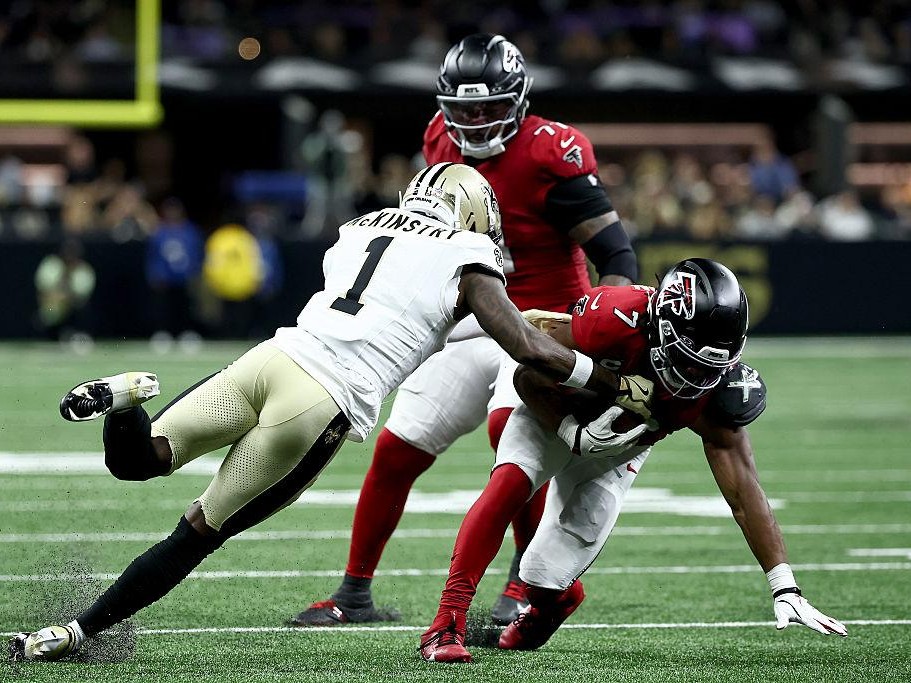
The New Orleans Saints entered Monday night with an opportunity to give their fans something special. The occasion was bigger than an ordinary regular-season game. It was Monday Night Football, the rivalry with the Atlanta Falcons, and a celebration of the Superdome's legacy. But instead of delivering a memorable victory, the Saints suffered a painful 45–24 defeat that exposed the very problems threatening to derail their season.
For a franchise looking to establish a new identity under head coach Kellen Moore, this was more than another loss. It was a reality check. The Saints fell to 1–3, while Atlanta took advantage of New Orleans' mistakes, controlled the ground game, and demonstrated the kind of execution the home team desperately needed. Now the question facing the Saints is straightforward: Can this team turn an embarrassing night into the beginning of a genuine turnaround, or are the same problems going to continue following them throughout the season?
From the perspective of AMPS Magazine, the answer will depend on accountability, consistency, and whether the coaching staff can translate its preparation into results when the lights are brightest.
What Happened? Atlanta Took Control Early
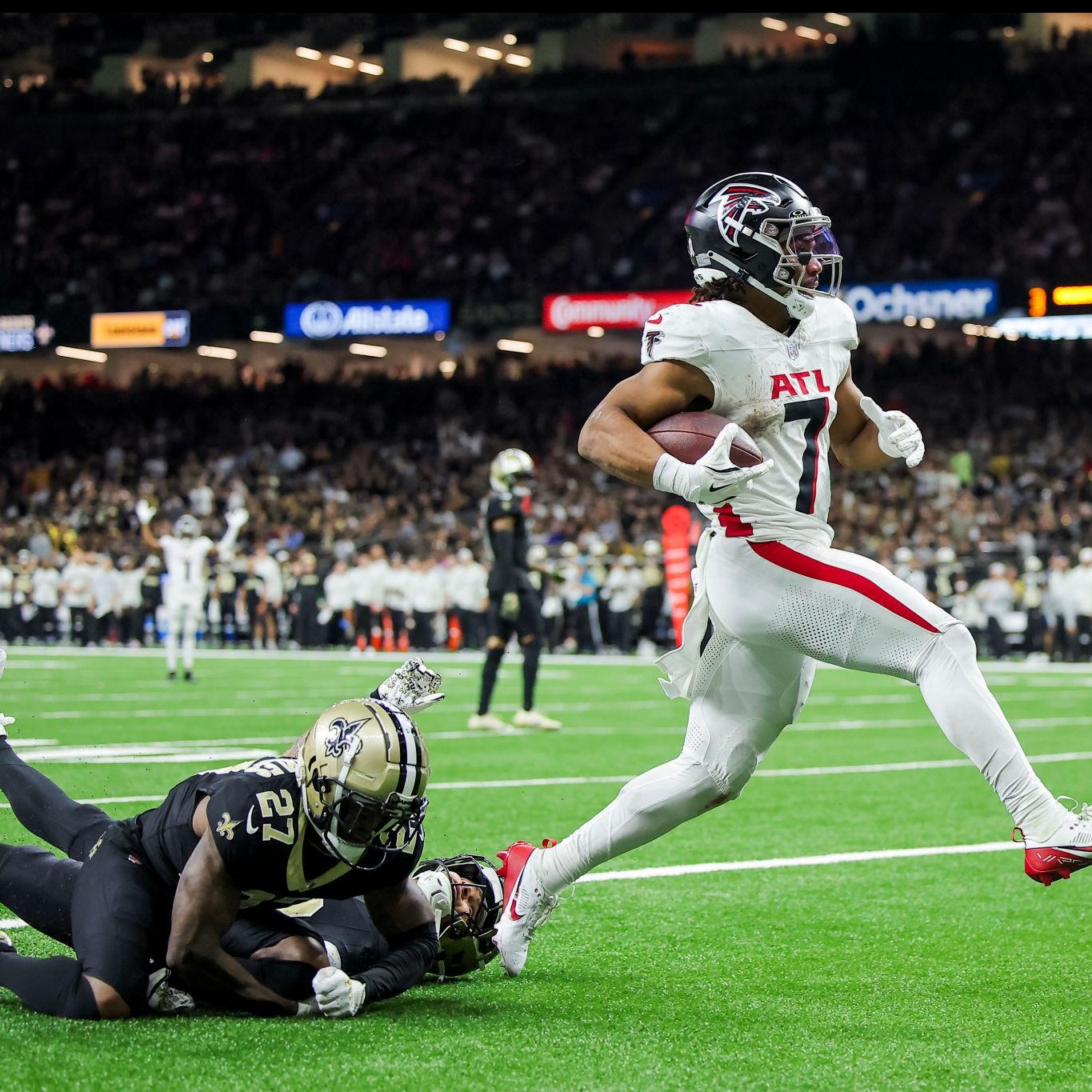
The atmosphere inside the Caesars Superdome was electric. The fans came ready to celebrate, the rivalry brought its usual intensity, and the Saints understood the significance of the occasion. Unfortunately, the energy in the building did not translate into performance on the field.
Atlanta wasted little time establishing control. The Falcons moved the ball effectively, scored on their opening possession, and forced New Orleans into an early three-and-out. Before the Saints could settle into their offensive rhythm, they were already chasing the game. An early turnover made matters worse, giving Atlanta additional momentum and placing even more pressure on a New Orleans offense that has struggled to produce points early this season.
The Falcons finished with 45 points and 205 rushing yards, finding the end zone five times on the ground. Bijan Robinson was a major factor, using his speed, vision, and ability to break tackles to exploit the Saints' defensive gaps. A 59-yard touchdown run helped set the tone, and Atlanta continued to find room to operate as the game progressed.
Saints veteran defensive end Cameron Jordan did not hide his frustration.
"We weren't good on offense, defense or special teams," Jordan acknowledged, according to the team's postgame comments. He also pointed to the defensive line's responsibility for stopping Atlanta's running attack, emphasizing that the Saints could not allow a talented back like Robinson to dictate the game.
His assessment captured the larger problem. New Orleans did not lose because of one bad play, one questionable call, or one player failing to deliver. The Saints struggled in all three phases of football, and Atlanta took advantage of nearly every opportunity.
The Saints did manage 24 points, but much of their challenge was created by the hole they dug early. Against an opponent capable of running the football effectively and generating explosive passing plays, falling behind quickly changes the entire offensive strategy. New Orleans was forced into more obvious passing situations, making it harder to establish the running game and easier for Atlanta to apply pressure.
That is not a winning formula in the NFL.
Why Are the Saints Still Struggling to Win Games?
The most concerning part of this loss is that the problems are becoming familiar. Slow starts, inconsistent rushing production, turnovers, defensive breakdowns, and missed opportunities have made it difficult for New Orleans to put together four quarters of winning football.
Through four games, the Saints have scored only six points in the first quarter and 26 points in the first half. Those numbers tell a story of a team that repeatedly puts itself in a difficult position before it has a chance to establish control.
Head coach Kellen Moore acknowledged that the team has to find answers.
"We have tried a number of different things. Obviously, we have to solve this. We have to find a way," Moore said when discussing the slow starts.
That statement reflects the urgency surrounding the organization. Preparation is important, but preparation means little if the execution does not follow. Moore accepted responsibility for the team's performance, acknowledging that he did not coach well enough and that the players did not execute well enough.
Quarterback Tyler Shough offered a slightly different perspective on the preparation question. He said he believed the team was prepared but failed to execute when the opportunity arrived. He also pointed to the early turnover and the offense's inability to string together productive opening drives.
"We've got to be able to put some of those early drives together and score more points early on to get it going," Shough explained.
That distinction matters. If the players understand the game plan, the coaching staff must determine why the plan is not translating into effective football. Is it the play calling? Is it the timing of the offense? Are players making the right decisions under pressure? Or is the team struggling to adjust when an opponent disrupts its original strategy?
The answer may involve all of those factors.
The Running Game Must Become a Strength
New Orleans has rushed for 354 yards through four games, averaging just 3.6 yards per carry. Meanwhile, opponents have accumulated 591 rushing yards and nine touchdowns on 117 carries, averaging 5.1 yards per attempt.
That difference is significant. A football team that cannot consistently run the ball has difficulty controlling the clock, maintaining manageable third downs, and keeping opposing defenses from concentrating on the passing game. When the defense cannot stop the run, the offense faces even greater pressure to score.
Moore has emphasized the need to improve the team's outside-zone running scheme, but he also recognizes that fixing the problem requires more than pointing fingers at the offensive line or running backs. Perimeter blocking, assignments, adjustments at the line of scrimmage, and fundamental execution all have to improve.
The defensive problems are equally serious. Atlanta's ability to run the ball forced New Orleans to commit additional attention to the line of scrimmage, creating opportunities elsewhere on the field. When a defense cannot close running lanes, tackle consistently, or generate turnovers, even a respectable offensive performance can become insufficient.
Saints tight end Juwan Johnson summed up the challenge in simple terms: the team must stop creating problems for itself and play smarter football.
The Saints do not necessarily need a completely different identity. They need to execute the identity they are trying to build.
What Does the Future Hold for Kellen Moore?
This is where the conversation becomes more complicated.
Moore is attempting to establish a consistent system, develop the players, and build a team capable of competing in the NFC South. A 1–3 start is not the beginning he wanted, and a 45–24 loss to a division rival on national television only intensifies the pressure.
Still, one game, even a particularly painful one, should not automatically determine a coach's future. The more important question is whether the team demonstrates measurable improvement over the weeks ahead.
Moore's willingness to accept responsibility is encouraging. Coaches must be able to recognize their own shortcomings, evaluate their decisions, and make adjustments. He has indicated that the Saints will examine their practice schedules, preparation methods, offensive approach, and defensive execution in an effort to address the recurring slow starts.
But accountability must lead to action.
If the Saints continue to start slowly, surrender large rushing totals, and struggle to protect the football, questions about the coaching staff's effectiveness will naturally grow. If Moore can correct those issues and establish a more consistent level of performance, this difficult stretch could become an important part of the team's development.
The remaining 13 regular-season games offer opportunities to change the narrative. However, the margin for error is shrinking. New Orleans cannot afford to spend several more weeks discussing the same problems without showing progress on the scoreboard.
The coaching staff must also find ways to help Shough and the offense play with confidence early. That means building manageable opening possessions, protecting the quarterback, making smart decisions against pressure, and giving the running game a chance to develop before the team falls behind.
For Moore, the next few games will be an important test of leadership. His challenge is not simply to convince the locker room that better football is possible. He must help the players demonstrate it.
Can the Saints Turn Adversity Into Opportunity?
Despite the disappointment, there are reasons not to write off the season just yet.
Shough has expressed confidence in the team's leadership and its ability to remain united. He admitted that the defeat was embarrassing, especially given the importance of the game to the city and its fans, but he also emphasized that the team has more opportunities ahead.
"We're going to keep climbing," Shough said.
Wide receiver Devaughn Vele echoed that determination, expressing faith in the team while acknowledging the need to return to the drawing board and correct mistakes. Jordan's frustration also reflected a veteran who understands the standard expected of the Saints, particularly when playing a division rival at home.
That leadership could prove valuable, but unity alone will not fix the standings. The Saints must turn frustration into better preparation, sharper execution, and results.
Their next challenge against the Minnesota Vikings, who entered the week at 4–0 according to the supplied game notes, presents an immediate opportunity to respond. New Orleans must avoid another slow start, protect the football, improve its rushing attack, and find a way to limit an opponent's ability to control the game.
The Saints need to show that the Atlanta loss was a turning point rather than a preview of what lies ahead.
The AMPS Magazine Verdict: The Clock Is Ticking
The New Orleans Saints are at a crossroads. The talent and leadership may be present, but the team has yet to demonstrate the consistency required to turn potential into victories. A strong crowd, a meaningful occasion, and a week of preparation cannot substitute for execution when the game begins.
Moore deserves the opportunity to make adjustments, but that opportunity must come with expectations. The Saints need to start faster, run the football more effectively, defend the run with greater discipline, and eliminate costly turnovers. They must also prove they can respond when adversity arrives instead of allowing one mistake to become a series of mistakes.
For the fans who continue to fill the Superdome and support this franchise, the disappointment is understandable. New Orleans is a city that embraces its football team as part of its identity. Its supporters want more than promises of improvement. They want to see a team that competes with purpose, plays with discipline, and finishes what it starts.
As AMPS Magazine sports writer Gerald Wright, I believe the Saints' season is not defined by one Monday night defeat. It will be defined by what happens next.
The Vikings game will not solve every problem, but it can provide an early indication of whether this team has learned anything from Atlanta. A competitive performance, improved execution, and evidence of real adjustments would give fans something meaningful to build on. Another slow start and another series of preventable mistakes would only deepen concerns about the direction of the team.
The Saints have 13 games remaining, but the time to change their story is now. Moore and his players have an opportunity to turn adversity into momentum. Whether they seize it will determine not only the course of this season, but also the confidence the organization can carry into the future.
The message is simple: New Orleans does not need another explanation. It needs a response.
Gerald Wright is a sports writer for AMPS Magazine — American Minority People Succeeding.