There are some events that become bigger than the reason they were created. The Circle City Classic is one of those events. For more than four decades, Indianapolis has watched this celebration grow from an HBCU football game into a major gathering built around education, music, marching bands, community, family, business, culture and Black excellence.
But in 2026, the Circle City Classic looked different.
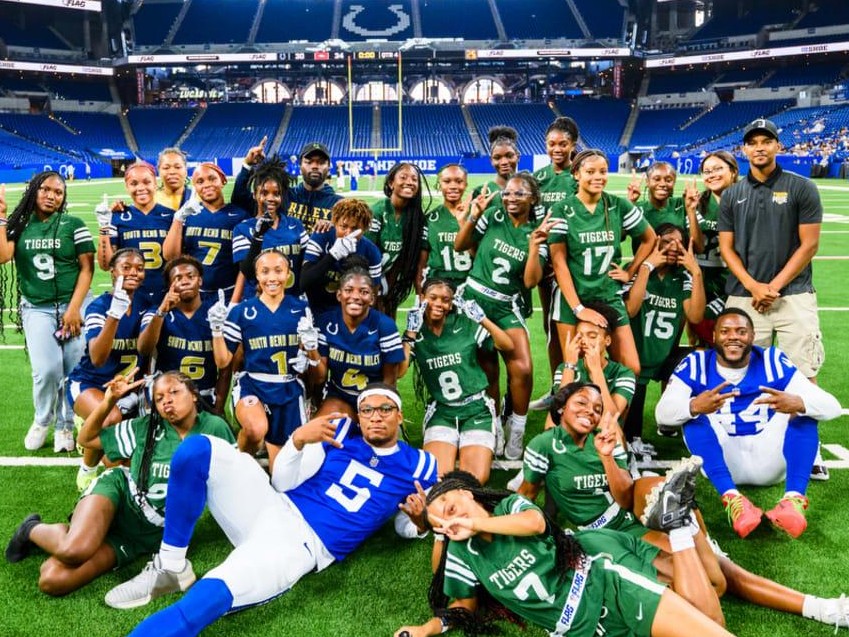
The 42nd Annual Circle City Classic, held September 25–26 in Indianapolis, marked one of the most significant changes in the event's history. Instead of bringing two HBCU football teams to Lucas Oil Stadium for the traditional college matchup, Indiana Black Expo created a High School Football Showcase featuring local Indianapolis-area boys' football and girls' flag football teams.
For AMPS Magazine, this is where the story gets interesting. The question was not simply, Who won the football games? The bigger question was: What happens when a tradition built around bringing HBCUs to Indianapolis decides to put Indianapolis' own young people on the biggest stage?
The answer, at least from the structure of this year's event, was an attempt to bring the Classic closer to home while making sure the HBCU connection remained alive.
The official Circle City Classic website describes the event as much more than football, emphasizing education, career development and culture as part of Indiana Black Expo's mission. The 2026 program continued that approach through the Coronation, Prayer & Praise Worship Service, Coaches Luncheon, Talent Day, parade, college fair, football showcase, Fan Festival and HBCU Battle of the Bands.
WHY DID INDIANA BLACK EXPO CHANGE THE CLASSIC?
To understand 2026, we have to understand the economics and changing landscape surrounding the Circle City Classic.
For years, the traditional formula was relatively straightforward: bring two HBCU football programs to Indianapolis, sell tickets, attract alumni and fans from around the country, fill Lucas Oil Stadium, and use the event to generate revenue for scholarships and Indiana Black Expo's community programming.
That model became more difficult.
Indiana Black Expo President and CEO Alice Watson explained that the organization was facing higher costs associated with bringing Division I HBCU football programs to Indianapolis. Reporting ahead of the 2026 Classic said HBCU teams could command hundreds of thousands of dollars for appearances, while attendance and revenue had declined in recent years. Watson said the organization could no longer sustain the previous model as a nonprofit without finding a different approach.
The change was also connected to competition.
When the Circle City Classic began, HBCU football classics were far less common. Today there are numerous classics across the country, giving HBCU alumni and fans many more opportunities to see their schools play closer to home or at other major events.
That created a difficult question for IBE: How do you preserve the mission of the Circle City Classic when the traditional football model is no longer producing the same results?
The answer was to bring the focus home.
Rather than spending the majority of the event's football resources on an HBCU matchup, IBE put local high school athletes on the field. The organization said the move was intended to reduce costs while maintaining its commitment to community, youth and future generations. Visit Indy reported that IBE specifically cited changing engagement trends, fundraising models and corporate partnerships as reasons for the new approach.
There was also a youth-development component.
Girls flag football has been expanding rapidly in Indiana. Reporting before the event noted that the number of Indiana girls flag football teams had grown dramatically in just a few years. Watson also connected the sport's growth and its Olympic future to the decision to give girls an opportunity to play at Lucas Oil Stadium.
So the change was not simply, "We don't want HBCU football anymore."
It was closer to: How can the Circle City Classic continue to accomplish its mission when the traditional model is becoming more difficult to sustain?
That distinction matters.
THE CLASSIC WAS STILL AN HBCU EXPERIENCE
One of the biggest misconceptions about the 2026 change would be to assume that HBCUs disappeared from the Circle City Classic.
They didn't.
In fact, HBCU culture remained one of the most visible pieces of the weekend.
The HBCU Battle of the Bands featured Talladega College, Kentucky State University and Miles College at Lucas Oil Stadium. The performances were designed not simply as entertainment but as a way of introducing younger generations to the history and culture of HBCUs.
For anyone who understands HBCU culture, the marching band is not simply the halftime entertainment.
It is part of the experience.
The drums, the dancers, the uniforms, the precision, the crowd participation and the history attached to every performance create a connection between generations. IBE specifically described the Battle of the Bands as a way to introduce younger people to HBCU history, culture and impact.
And that may be one of the most important pieces of the 2026 strategy.
If the football game is no longer the primary HBCU component, the organization has to find other ways to make sure young people understand why HBCUs matter.
The Battle of the Bands did exactly that.
THE CIRCLE CITY CLASSIC WEEK BEGAN BEFORE THE GAMES
The Classic was not a one-day football event.
The 2026 Fall Festival began with events leading into the weekend.
Circle City Classic Coronation
The Circle City Classic Coronation took place September 20. This program has been part of the Classic tradition since 1986 and focuses on high school girls' academic achievement, community service, leadership and character.
The program is specifically described as not being a traditional beauty or talent contest. Participants go through workshops that address teamwork, communication, goal-setting, financial literacy, etiquette and other life skills.
That makes the Coronation another example of the Classic's larger purpose.
It is about developing young people.
Prayer & Praise Worship Service
On September 23, the Classic moved into its spiritual tradition with the Prayer & Praise Worship Service.
The official Circle City Classic website describes the event as an opportunity to bring the community together through faith, worship and spiritual renewal.
Coaches Luncheon
Friday, September 25 brought the Circle City Classic Coaches Luncheon to Lucas Oil Stadium.
The luncheon recognized coaches, student-athletes, supporters, volunteers and honorees connected to the Classic.
One of the most prestigious traditions associated with the luncheon is the Major Taylor Award, which honors African American athletes, coaches, athletic administrators and officials who have made significant contributions to youth and encouraged excellence in future generations. Past recipients include Jackie Joyner-Kersee, Muhammad Ali, Jerry Rice, Tommie Smith and John Carlos, Tony Dungy, Tamika Catchings and Robert Mathis.
Former Indianapolis Colts cornerback Kenny Moore II was the 2026 Major Taylor Award recipient. Moore spent nine seasons with the Colts and was recognized for his community impact as well as his football career.
Talent Day
Talent Day was held Friday afternoon in the Lucas Oil Stadium East Lounge.
This program connected student-athletes, recent college graduates and aspiring professionals with employers representing different workforce industries.
For AMPS Magazine, this is another piece of the Classic that deserves attention because it shows that the event is not only about what happens on a football field.
It is about what happens after high school and college.
FRIDAY NIGHT: THE ENERGY STARTED BUILDING
Friday evening brought the Circle City Classic Pep Rally, giving local teams, cheerleaders, performers and supporters an opportunity to get ready for Saturday.
The weekend also included DJ G Indy FunkFest, adding a music component to the Friday-night celebration. The event was promoted as part of the larger Fall Festival surrounding the Classic.
That atmosphere carried directly into Saturday.
SATURDAY MORNING: THE CIRCLE CITY CLASSIC PARADE
If you have ever experienced Circle City Classic weekend in Indianapolis, you know the parade is a story by itself.
The Circle City Classic Parade remained one of the signature events of the weekend.
The official Classic website says nearly 100,000 spectators gather each year for the parade, which features pageantry, celebrities, floats and marching bands.
In 2026, actor and entertainer Woody McClain served as grand marshal. McClain is known for portraying Bobby Brown in BET's The New Edition Story and The Bobby Brown Story, along with his role in Power Book II: Ghost. He also participated in the Education Day programming.
The parade continued to provide something that cannot be duplicated by a football game alone: Indianapolis gets to see the Classic in the streets.
Bands.
Dance teams.
Cheerleaders.
Community organizations.
Greek organizations.
Families.
Alumni.
Children.
Businesses.
It becomes a moving celebration of Indianapolis and the people who make up the city.
EDUCATION DAY: THE PART OF THE CLASSIC THAT CAN CHANGE A LIFE
While thousands of people were focused on football, another important event was taking place inside Lucas Oil Stadium.
Education Day & College Fair connected students with colleges and universities, including HBCUs.
The official program says approximately 25 to 30 colleges and universities participate, depending on the event information posted, giving students opportunities to learn about admissions, scholarships, campus life and academic programs.
IBE reported that approximately 2,500 people participated in the 2025 Education Day College Fair, and the organization hoped to significantly increase participation in 2026.
That may ultimately be one of the most important measurements of the new Circle City Classic.
A touchdown lasts seconds.
A championship lasts forever in someone's memory.
But a scholarship or college connection can change a person's entire life.
IBE says Circle City Classic has helped generate more than $5 million in scholarships since 1984, while the event has contributed more than $340 million to the Indianapolis economy over that span.
THE BLACK BUSINESS TRAINING INSTITUTE NETWORKING FORUM
The 2026 Saturday schedule also included the Black Business Training Institute Networking Forum, running from 10 a.m. to 2 p.m.
This addition continued another important part of the Classic's mission: connecting business and community.
For Black-owned businesses, entrepreneurs and professionals, these types of events can create relationships that extend beyond the weekend.
The Circle City Classic has always represented an economic opportunity for Indianapolis. Vendors, hotels, restaurants, transportation providers, entertainment companies and small businesses all have an opportunity to benefit from the people the Classic brings into the city.
THE NEW FOOTBALL FORMAT: FOUR GAMES, ONE STADIUM
And then came the biggest change.
Instead of one HBCU college football game, Lucas Oil Stadium hosted four high school football games, including two girls flag football games and two boys tackle football games.
The official Lucas Oil Stadium schedule placed the games throughout the day, beginning at 10 a.m. and continuing into the evening.
The schedule was:
10:00 a.m. — Crispus Attucks vs. Arsenal Tech — Girls Flag Football
11:30 a.m. — Lawrence North vs. Ben Davis — Girls Flag Football
2:00 p.m. — Warren Central vs. Pike — Boys Football
5:00 p.m. — HBCU Battle of the Bands
7:00 p.m. — Lawrence North vs. Ben Davis — Boys Football
That is a very different Circle City Classic.
But it also created something the old format could not provide: local high school athletes playing in an NFL stadium as part of one of Indianapolis' most recognized sporting traditions.
GAME ONE: CRISPUS ATTUCKS 26, ARSENAL TECH 24
The first football game of the 2026 Classic was historic before the first snap.
For the first time in the 42-year history of the Circle City Classic, girls flag football opened the sporting competition at Lucas Oil Stadium.
And it was not a ceremonial appearance.
It was a real game.
Crispus Attucks defeated Arsenal Tech, 26–24.
The two Indianapolis programs produced the type of close game that immediately made the new format feel competitive.
Attucks held on for the two-point victory, giving the Tigers the distinction of winning the first girls flag football game in Circle City Classic history.
That is bigger than a score.
For the players, this was an opportunity to walk into an NFL stadium, put on their school uniforms and compete in an event their families had watched for years.
The first game also sent a message about where high school girls' flag football is going.
The sport is growing quickly in Indiana, and the Circle City Classic placed it directly in front of a large audience and an HBCU-centered community.
GAME TWO: LAWRENCE NORTH 34, BEN DAVIS 0
The second girls flag football matchup was much more one-sided.
Lawrence North defeated Ben Davis, 34–0.
For Lawrence North, the shutout gave the Wildcats a dominant performance on one of the biggest stages available to Indiana high school athletes.
For Ben Davis, the result was disappointing on the scoreboard, but the opportunity itself remained historic.
The Giants were not simply playing another Saturday game.
They were playing under the lights and attention of the Circle City Classic.
The matchup also demonstrated why IBE's decision to include girls flag football was significant. These players were not placed on the sidelines as an exhibition. They were given the same stadium, the same spotlight and the same opportunity to represent their schools that the boys would receive later in the day.
GAME THREE: WARREN CENTRAL 24, PIKE 14
The afternoon brought the first boys' tackle football game of the new Classic format.
Warren Central defeated Pike, 24–14.
The matchup carried a strong Indianapolis connection because both programs were representing local communities that had been preparing for the Classic throughout the week.
Warren Central entered the game with momentum after defeating Ben Davis 25–8 the previous week, while the Warriors were also coming into the Classic undefeated.
The matchup also brought an additional layer of school pride.
Pike's choir, band, cheerleaders, dancers and color guard participated throughout Classic weekend, including the parade and stadium performances. Pike's school district described the event as more than football, emphasizing legacy, excellence, education and community.
That is important because the Circle City Classic is built around the entire school community.
The players were on the field.
But the band was there.
The cheerleaders were there.
The dancers were there.
Families were there.
Alumni were there.
The school was represented as a complete community.
Warren Central ultimately walked away with the 24–14 victory.
THE HBCU BATTLE OF THE BANDS
At 5 p.m., the football field transformed.
The HBCU Battle of the Bands brought Talladega College, Kentucky State University and Miles College into Lucas Oil Stadium.
This was perhaps the most important symbolic part of the 2026 Classic.
The football game had changed.
The HBCU connection had not.
The bands brought the sounds, movements and traditions that generations associate with the Circle City Classic.
The official event description specifically says the Battle of the Bands is intended to introduce younger generations to the history, culture and impact of HBCUs.
That means the Battle of the Bands was more than a replacement for halftime.
It was part of IBE's answer to the question of how the Circle City Classic can continue to introduce young people to HBCUs even when the primary football game no longer features HBCU teams.
And that is a conversation AMPS Magazine believes is worth having.
If a 12-year-old walks into Lucas Oil Stadium to see her local high school play and then watches a Kentucky State or Miles College band perform, she may leave with questions:
What is an HBCU?
Where is Kentucky State?
What does Miles College offer?
Could I go to an HBCU?
Those questions are exactly where education can begin.
GAME FOUR: LAWRENCE NORTH 31, BEN DAVIS 21
The final football game of the night brought the boys back to the field as Lawrence North faced Ben Davis.
Lawrence North entered the game with significant momentum after defeating Carmel 28–21 the previous week. Ben Davis, meanwhile, was coming off its 25–8 loss to Warren Central.
The nightcap was competitive, with Lawrence North earning a 31–21 victory over Ben Davis.
That gave Lawrence North a unique distinction in the new Classic format: the school participated in both a girls flag football matchup and the evening boys football showcase.
For Ben Davis, the weekend became an opportunity to showcase an entire school community at Lucas Oil Stadium.
For Lawrence North, it became a weekend of athletic exposure and competition on one of Indiana's biggest stages.
And for the Circle City Classic, the night ended with a high school football game rather than the traditional HBCU college matchup.
That difference will likely remain one of the most talked-about aspects of the 2026 Classic.
THE TAILGATE AND FAN FESTIVAL
Outside the stadium, the Tailgate & Fan Festival continued from noon until 10 p.m.
Food.
Vendors.
Music.
Entertainment.
Families.
Fans.
Community organizations.
The Classic still had the atmosphere of a major Indianapolis celebration.
The official event information positioned the Fan Festival as another major part of the Saturday experience, rather than simply something surrounding the football game.
There was also a 21-and-over Daycation Party and Greek Stroll-Off Competition inside Lucas Oil Stadium.
The event brought Divine Nine organizations into the celebration and gave them a chance to compete through music, movement and choreography.
Again, the message was clear:
The Circle City Classic was trying to become an all-day experience rather than a football game with activities around it.
SO, HOW DID THE COMMUNITY FEEL ABOUT THE CHANGE?
This may be the hardest question to answer because there is not yet a comprehensive independent post-event survey measuring Indianapolis' reaction to the 2026 format.
What we do have is a mixture of documented reactions before and during the event.
And those reactions were mixed.
Some people were disappointed that the traditional HBCU football game was gone. Sports Illustrated's reporting noted criticism from Black Indy Live following the announcement, showing that some community members saw the change as a loss of an important HBCU tradition.
That reaction is understandable.
For generations of HBCU alumni and Circle City Classic supporters, the college football game was the centerpiece.
There were people who traveled to Indianapolis specifically because their alma mater was playing.
There were alumni reunions.
There were school colors everywhere.
There was the anticipation of seeing two HBCU programs compete.
Changing that cannot happen without changing the emotional experience for longtime supporters.
But there was another side.
Pike principal Jeremy Wolley said the school was excited and honored to participate, describing the opportunity as a major stage for its students and emphasizing education, leadership, diversity and community.
At Ben Davis, cheerleader Aniyah Williams told WISH-TV that the environment felt like home rather than something intimidating.
That is significant.
The new Classic was designed to create ownership among local students.
Instead of watching someone else's team represent the city, Indianapolis students were given the opportunity to represent themselves.
WHAT ABOUT THE ATTENDANCE PROBLEM?
Attendance was one of the biggest reasons the change happened.
Reporting before the event said the 2025 college game had the lowest attendance in the event's 40-year history at that point. Weather connected to Hurricane Helene affected the 2025 crowd, but reporting also identified a longer-term decline.
That created a financial problem for IBE.
The organization has scholarships and year-round programming to support.
If the traditional football game is losing money, continuing to operate it simply because it has always been done that way creates another problem.
The 2026 strategy therefore became about sustainability.
IBE wanted to reduce the expense of bringing in HBCU football teams while creating an event that directly involved Indianapolis-area schools.
That does not guarantee the new model will work long-term.
But it explains why the change was made.
THE BIGGEST DIFFERENCE BETWEEN THE OLD AND NEW CLASSIC
The old Circle City Classic model was largely:
Bring the HBCUs to Indianapolis.
The 2026 model became:
Bring Indianapolis into the Circle City Classic.
That is a major philosophical change.
Instead of asking thousands of local fans to choose an HBCU team to support, IBE gave them their neighborhood schools.
Warren Central supporters could represent Warren.
Pike supporters could represent Pike.
Ben Davis supporters could represent Ben Davis.
Lawrence North supporters could represent Lawrence North.
Crispus Attucks and Arsenal Tech supporters could represent their schools.
At the same time, HBCUs remained present through the college fair and Battle of the Bands.
That combination may ultimately become the identity of the new Circle City Classic.
AMPS MAGAZINE'S VIEW: THIS IS A TRANSITION, NOT THE END OF THE CLASSIC
At AMPS Magazine, we understand why longtime Circle City Classic supporters may have mixed feelings.
Traditions matter.
When you have spent decades watching HBCU football teams come to Indianapolis, seeing that football matchup disappear can feel like something important has been taken away.
But traditions also have to evolve if the organization behind them is going to survive.
The 2026 Circle City Classic did something different.
It gave young people the opportunity to play at Lucas Oil Stadium.
It gave girls flag football a major platform.
It kept HBCU marching bands in the stadium.
It continued the college fair.
It continued the parade.
It continued the Coronation.
It continued worship.
It continued career development.
It continued business networking.
It continued the Fan Festival.
And it continued the scholarship mission.
The question going forward should not simply be whether the Circle City Classic returns to its old format.
The better question is:
What should the Circle City Classic become next?
Maybe there is a future where HBCU football returns periodically.
Maybe the high school showcase becomes a permanent part of the event.
Maybe both models can exist.
Maybe one year features HBCU football while another focuses on Indianapolis high schools.
The 2026 event has opened that conversation.
ONE LEGACY. ONE CITY. ONE CLASSIC.
The Circle City Classic has survived more than four decades because it has always represented more than a football game.
It represents Indianapolis.
It represents HBCU culture.
It represents education.
It represents Black business.
It represents scholarships.
It represents music.
It represents marching bands.
It represents families.
It represents young people dreaming about what they can become.
The 42nd Annual Circle City Classic may be remembered as the year the football game changed.
But perhaps it should also be remembered as the year Indianapolis high school athletes were given a larger piece of the Classic's spotlight.
Crispus Attucks made history by winning the first girls flag football game in Circle City Classic history.
Lawrence North dominated Ben Davis in the second girls game and later defeated Ben Davis in the boys nightcap.
Warren Central defeated Pike in the afternoon showcase.
Talladega College, Kentucky State University and Miles College kept the HBCU band tradition alive.
Students walked through the college fair.
Businesses networked.
Families filled downtown.
The parade moved through the streets.
And Lucas Oil Stadium became a stage for an entirely new generation.
That is the story AMPS Magazine takes away from Circle City Classic 2026.
The Classic changed.
But it did not disappear.
The challenge now is making sure the new version continues to honor the history that made the Circle City Classic special in the first place.
Because if there is one thing Indianapolis has shown over 42 years, it is that the Circle City Classic is bigger than one football game.
It is a community.
It is a tradition.
It is an opportunity.
And now, it is entering a new chapter.