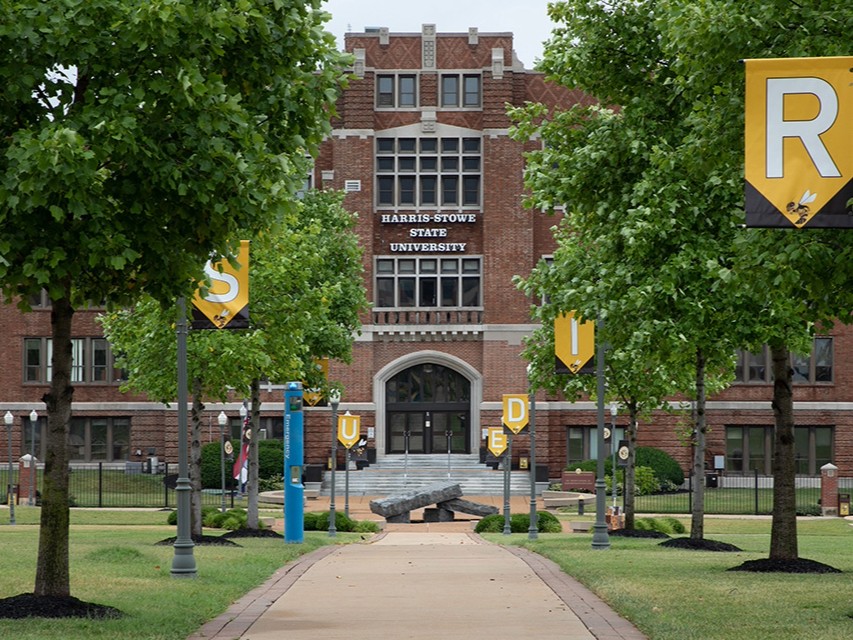
The history of Harris–Stowe State University in St. Louis, Missouri, tells a story about education, racial separation and the determination to prepare Black teachers despite unequal opportunities. Unlike institutions that began as a single school, Harris–Stowe developed from two separate teacher-training institutions operating within the same city. Their histories reveal an important reality about American education: the opportunity to become an educator was not equally available to everyone, and Black communities often had to create their own pathways to professional advancement.
One predecessor, Harris Teachers College, traced its beginnings to 1857, when St. Louis Public Schools established a normal school for white students. A normal school was designed to prepare people to become teachers. More than three decades later, in 1890, the school system established a separate institution for Black teachers, originally known as Sumner Normal School. That institution later became Stowe Teachers College, named in honor of abolitionist and author Harriet Beecher Stowe. The two schools performed a similar essential function, preparing educators to serve children, but their separate origins reflected the racial divisions embedded in the educational system of the period. In 1954, Harris Teachers College and Stowe Teachers College merged as part of the steps taken toward integrating St. Louis public schools. The institution eventually became Harris–Stowe State University.
The story of Stowe is especially important when considering the historical role of HBCUs. Black teachers were not simply filling positions in classrooms. They were helping children develop literacy, confidence and an understanding of their possibilities in a society where discrimination could restrict their ambitions. Educators also served as role models, showing students that professional achievement was possible even when the surrounding system did not always offer equal treatment. Training Black teachers meant strengthening entire communities because every prepared educator could influence hundreds of young lives over the course of a career.
Harris–Stowe's evolution also demonstrates that HBCUs have never been frozen in the past. The university expanded beyond its original teacher-training mission to include areas such as business, urban affairs, science, technology, engineering and mathematics. That development reflects the changing needs of students and employers. Today's graduates must navigate an economy shaped by digital technology, healthcare demands, entrepreneurship and new forms of communication. HBCUs must therefore preserve their historical missions while continuing to prepare students for the careers and leadership responsibilities of tomorrow.
Why does this matter to America today? Because the need for qualified educators, effective leaders and professionals who understand the communities they serve has not disappeared. Schools benefit when talented teachers have strong preparation, and communities benefit when students can envision successful futures. HBCUs also offer students opportunities to develop professional relationships, cultural understanding and leadership skills in environments shaped by a long tradition of educational perseverance.
Harris–Stowe's history is a reminder that educational institutions can emerge from unequal circumstances and evolve into places of opportunity. Two schools that began separately ultimately became one university. Their story challenges us to look beyond the buildings and ask what education should accomplish. It should prepare people to earn a living, contribute to society and open doors for those who follow. For AMPS Magazine, that is the enduring relevance of Harris–Stowe: its history matters, but its greatest responsibility is helping shape what comes next.